Jump To
Drywall acts like a sponge. Once water hits it, the gypsum core and paper backing soak it up, and the damage often spreads past the wet spot you can see. If your wall got soaked, our team handles water damaged drywall repair across Orange County, and the question we always hear is simple: can this wall be saved, or does it have to come out? The honest answer depends on a few things, and we’ll walk you through them.
We are Revival Water Damage Restoration of Orange County, a family-owned team that has spent more than 15 years fixing homes here, with over 30 years of combined experience on the crew. So let’s talk drywall.
What Water Actually Does to Drywall
Water breaks down the bond that holds drywall together. Standard drywall is a gypsum core wrapped in paper, and both love to hold moisture. Within hours, the panel starts to soften, swell, and sag.
The paper facing is the real problem. It’s organic, which means it feeds mold once it gets damp. The EPA notes that mold can start growing on a wet surface in as little as 24 to 48 hours. That’s a tight window, and it’s why waiting rarely helps.
Here in Orange County, most homes sit on slab foundations. Water tends to travel low and wick up into the bottom of the wall, so damage often hides behind baseboards long before it shows on the surface.
The clock on wet drywall
0 to 24 hours: Paper softens, panels start to swell, paint may bubble.
24 to 48 hours: Mold spores wake up on damp paper and begin to spread.
48 hours and beyond: Sagging, crumbling, and mold behind the wall get harder to reverse.
How to Tell If Your Drywall Is Water-Damaged
Water damaged drywall gives off clear warning signs. Watch for stains, soft spots, bubbling paint, a musty smell, or a wall that feels cool and damp. Some clues shout at you. Others stay hidden.
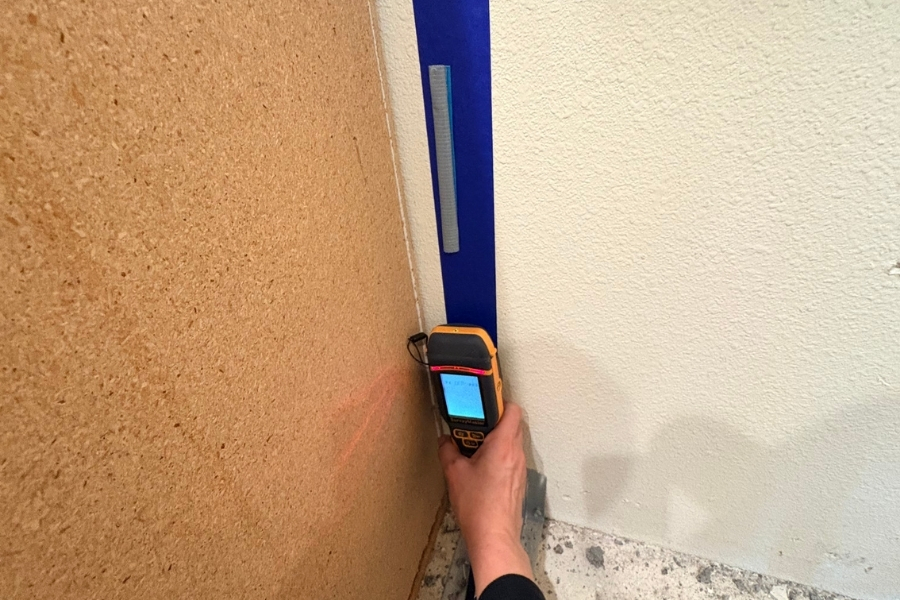
A moisture meter reading during a Fountain Valley job. Numbers tell us what our eyes can’t.
Here’s a quick checklist you can run before help arrives:
- Discoloration: Yellow, brown, or dark rings usually mean water has moved through the panel.
- Texture change: Bulging, bubbling, or a spongy feel when you press gently.
- Smell: A damp, earthy odor often points to moisture trapped inside the wall.
- Peeling: Paint or wallpaper lifting away from the surface.
- Sagging: Ceilings that dip or bow are a serious red flag.
The tricky part is that drywall can look dry on the outside while it’s still soaked underneath. We use moisture meters and thermal cameras to find the water you can’t see, which is a big reason hidden damage behind your walls gets missed by the naked eye.
Not sure how far the water spread?
We’ll check behind the surface before you tear anything out. It saves guesswork and money.
When Water damaged Drywall Can Be Saved
Sometimes drywall can be dried in place and kept. This usually works when the water was clean, the exposure was brief, and we reach it fast. Clean water from a supply line or a fresh appliance leak gives you the best odds.
Speed matters most. When we start professional structural drying services within that first day or two, air movers and dehumidifiers can often pull the moisture out before the panel breaks down. The wall gets monitored daily until the readings hit normal.
Category matters too. The restoration industry sorts water into three groups, and it changes everything about what happens next.
| Water type | Where it comes from | Can drywall be saved? |
|---|---|---|
| Category 1 (clean) | Supply lines, fresh appliance leaks | Often, if dried fast |
| Category 2 (grey) | Washing machines, dishwashers | Sometimes, with treatment |
| Category 3 (black) | Sewage, flooding, toilet overflow | No, it must be removed |
When Drywall Has to Go
Some drywall can’t be saved, and trying to keep it only creates bigger problems later. If any of the situations below apply, the panel needs to come out.
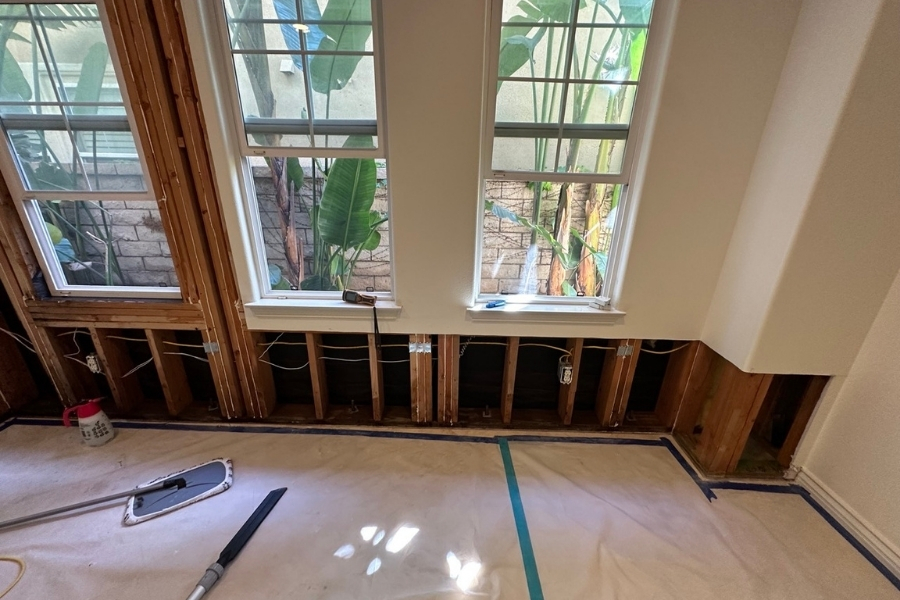
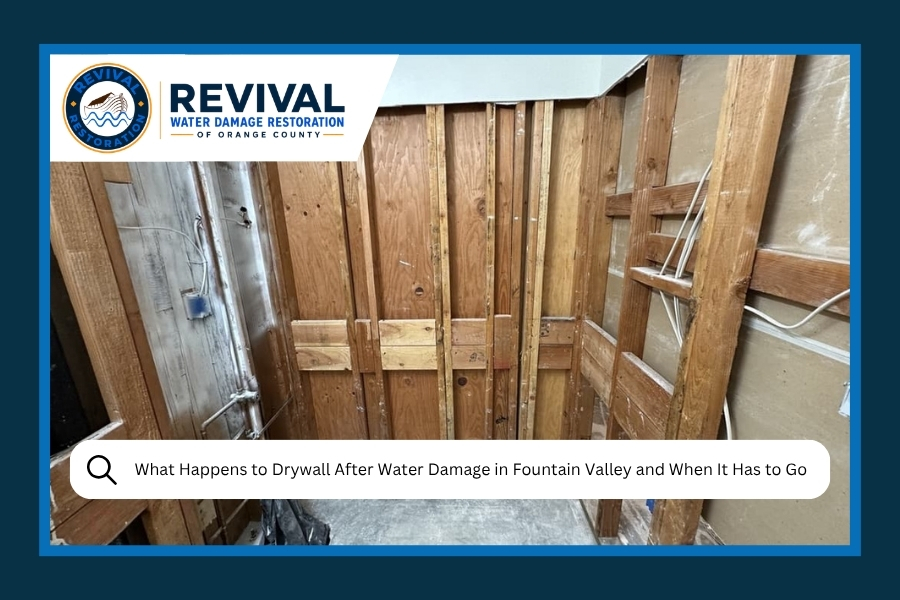
Flood cuts on a Fountain Valley job. Removing the wet lower section lets the wall cavity dry.
Drywall has to be removed when:
- It touched grey or black water, like sewage or a toilet overflow.
- It stayed wet for more than 48 hours and started to sag or crumble.
- Mold has taken hold on or behind the panel.
- The core is soft, warped, or falling apart in pieces.
When mold is in the picture, cutting corners is risky. We follow careful containment steps and, when needed, bring in our professional mold remediation services to keep spores from spreading to clean rooms. Any lab testing is handled by a separate third-party company, so the results stay neutral.
A common approach is the flood cut. Instead of tearing out a whole wall, we remove the lower section a foot or two above the water line. That opens the cavity to dry the studs and insulation, and it keeps the repair smaller.
How We Repair Drywall the Right Way
Good drywall repair follows a clear order. Skip a step, and moisture or mold can come right back. Here’s how our crew works through it.
- Find the source. We stop the leak first, because repairing a wall while it’s still getting wet is pointless.
- Measure the moisture. Meters and cameras map how far the water traveled.
- Remove what’s ruined. Soaked, moldy, or contaminated drywall comes out, often with a flood cut.
- Dry the cavity. Air movers and dehumidifiers bring the wall back to a safe moisture level.
- Rebuild. New drywall goes in, then taping, texture, and paint to match the room.
Because we handle cleanup and the rebuild in-house, you’re not juggling separate contractors. Want a fuller picture? Our guide to the steps in a water damage job breaks it down, and the day-by-day water restoration timeline shows what to expect.
We follow the IICRC S500 water damage standard, and our water restoration technicians are IICRC certified. Our work is backed by CSLB General Contractor License No. 963379.
Wet drywall in your home?
We serve homeowners across Orange County, from the coast to the hills. Reach out and we’ll take it from here.
Frequently Asked Questions
How long does drywall need to stay wet before it’s ruined?
Clean water caught within about a day can often be dried and saved. Once drywall sits wet past 48 hours, or once mold appears, the panel usually has to be replaced. Fast action makes the difference.
Can I just paint over a water stain on drywall?
Not safely. A stain means water moved through the panel, and paint won’t fix soft gypsum or hidden mold. Check the moisture behind it first, then repair or replace before you repaint.
Does water damaged drywall always mean mold?
No, but the risk climbs fast. Mold needs moisture and an organic surface, and drywall paper offers both. Drying the wall quickly is the best way to keep mold from taking hold.
Do you handle both the removal and the rebuild?
Yes. Our team dries and removes damaged drywall, then rebuilds and refinishes the wall in-house. You get one crew from the first wet spot to the final coat of paint.