Jump To:
Mold shouldn’t come back after professional mold remediation. But it does, and way more often than most Orange County homeowners expect.
Our IICRC-certified water restoration technicians at Revival Water Damage Restoration of Orange County see this pattern all the time. The root cause? Moisture that nobody fully resolved.
If you’ve already paid for mold removal and you’re seeing spots again, you’re not imagining things. Let’s talk about why it happens and what actually stops it.
Why Does Mold Grow Back After Remediation?
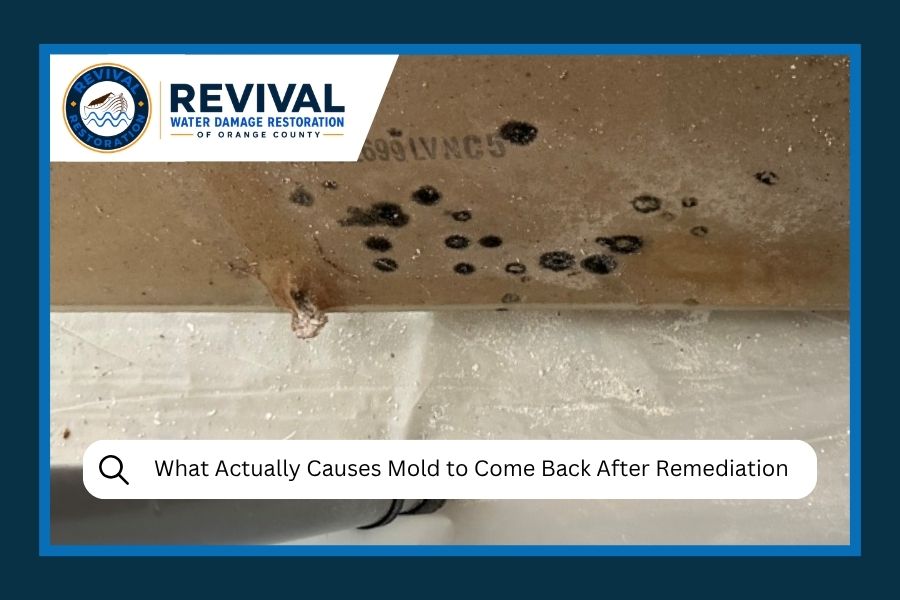
Mold returns when the conditions that caused it still exist. Remediation removes visible colonies, but new spores colonize the same area within days if moisture stays active. It’s like mopping a floor while the sink overflows.
Mold spores exist everywhere, indoors and outdoors. According to the EPA’s mold cleanup guide, the key isn’t killing every spore. It’s controlling moisture. That shifts the whole conversation from “kill the mold” to “find the water.”
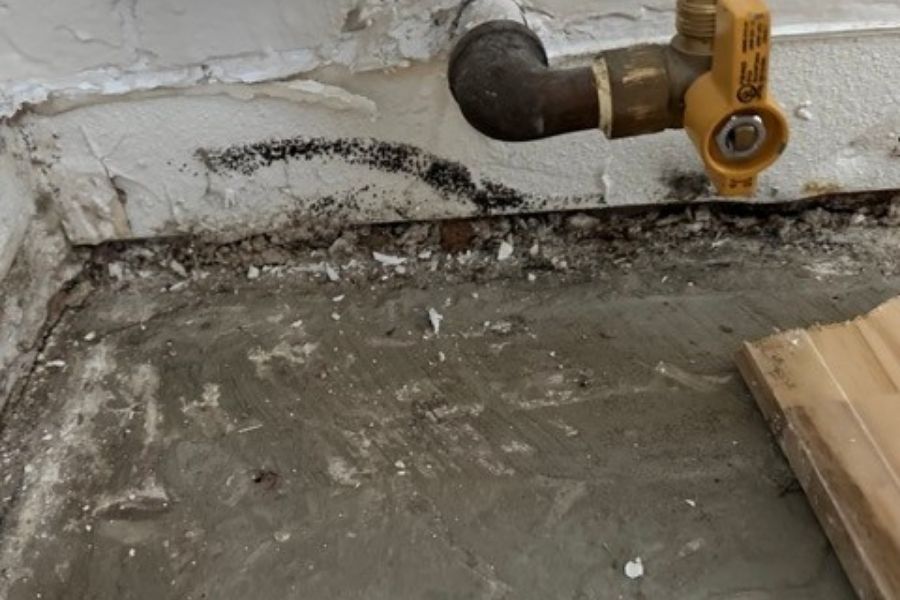
Mold hides behind baseboards where moisture gets trapped between drywall and flooring.
The Moisture Source Was Never Fixed
This is the top reason mold comes back. A crew removes contaminated drywall, treats the area, and installs new materials. Looks great. But if nobody found the actual leak, that new drywall sits in the same wet conditions.
In Orange County, the most common culprits behind recurring mold are slow slab leaks that seep through concrete, AC condensation dripping inside wall cavities, and appliance connections that drip small amounts over months.
Slab leaks are tricky. Water migrates through concrete, travels sideways, and shows up as mold on a wall far from the leak point. Without thermal imaging or moisture mapping, a company might clean the mold and miss the source entirely.
Dealing With Recurring Mold?
We find the moisture source first, then remove the mold. That’s how you stop the cycle.
Hidden Mold Behind Walls and Under Flooring
Some of the worst mold we’ve found was behind baseboards, inside wall cavities, or under vinyl plank flooring. If a company only treats the visible surface and doesn’t look deeper, active colonies stay put.
Those hidden colonies keep producing spores. The spores travel through your HVAC system and land on other damp surfaces. Weeks later, new growth appears somewhere else entirely, and it looks like a different problem. Usually, it’s the same one.
If you’ve noticed signs of hidden water damage, there’s a strong chance mold has followed the moisture deeper than what’s visible. Good remediation means opening up affected areas enough to see the full picture before cleanup starts.
How Do Indoor Humidity and Poor Ventilation Cause Regrowth?
Even after a solid remediation, mold returns if indoor humidity stays above 60%. Orange County’s coastal climate creates higher baseline moisture, especially in cities like Newport Beach and Costa Mesa. Homes with poor ventilation trap that moisture inside.
The CDC’s mold and health overview recommends keeping indoor humidity between 30% and 50%. Bathrooms without exhaust fans, kitchens that vent into the attic, and AC closets with clogged drain lines are common problem spots.
Humidity Hotspots in OC Homes
| Area | Why Moisture Builds | What to Check |
|---|---|---|
| Bathrooms | Shower steam with no fan or fan venting into attic | Fan vents outside, runs 20 min after shower |
| Kitchen | Cooking steam, dishwasher heat, under-sink leaks | Range hood vents outside, no water under sink |
| Laundry area | Dryer vent issues, loose washer hose fittings | Dryer duct clear and vented outside, hoses tight |
| AC closet | Condensation from coil, clogged drain line | Drain pan dry, no stains on nearby walls |
Here’s a situation we’ve seen too many times: a homeowner gets mold cleaned in the guest bathroom. Six months later, it’s growing behind the shared hallway wall. The AC condensate line had been dripping into the wall cavity the whole time. Nobody checked during remediation because the mold was “in the bathroom.”
What Does Incomplete Remediation Look Like?
Proper remediation follows the IICRC S520 mold remediation standard. That means containment barriers, HEPA air filtration, full removal of contaminated porous materials, and post-remediation testing.
Incomplete work skips one or more of those steps. We’ve seen homes where a previous company sprayed bleach on surface mold and called it done. Bleach can’t penetrate drywall or wood. The surface looks clean, but mold roots stay embedded and regrow.
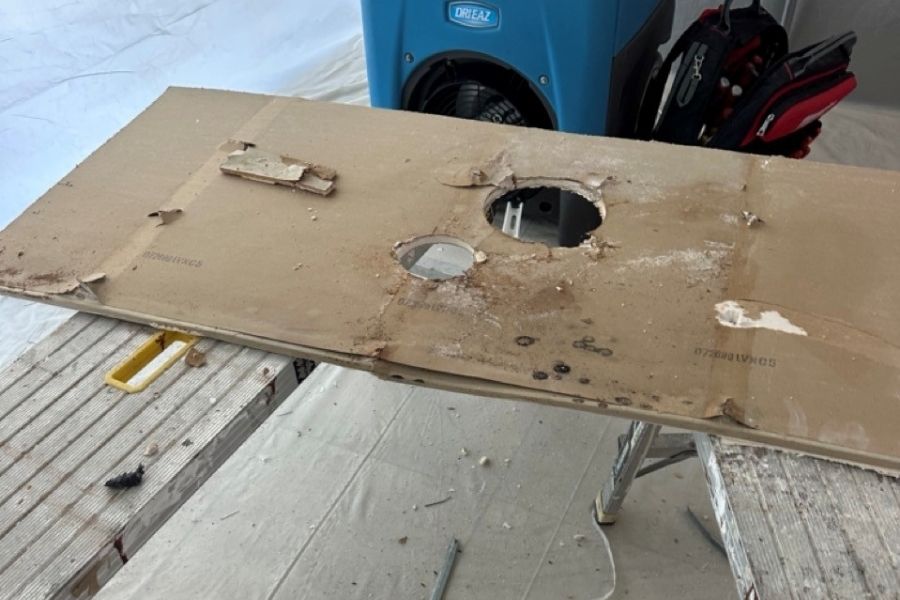
Proper remediation means removing contaminated materials, not just wiping the surface.
Other red flags: no containment set up during the job, no HEPA filtration on site, drywall that was “treated” but never replaced, and no moisture readings taken. If a company skipped moisture readings, they were guessing about whether conditions were safe. That guesswork leads to regrowth.
How to Prevent Mold From Coming Back for Good
Stopping mold permanently means addressing every factor that supports growth. Here’s what to expect from a thorough approach.
Fix the moisture source before removing mold. That might mean water damage restoration for a hidden leak, a plumbing repair, or an HVAC fix. If a company starts tearing out drywall before mapping where the water comes from, that’s a red flag.
Require post-remediation verification. After removal and before rebuild, a third-party inspector should test to confirm mold levels are back to normal. This gives you objective proof the work was done right.
Control humidity long-term. Fix ventilation, install exhaust fans where needed, and consider a dehumidifier if your home runs above 50%. A $30 hygrometer from the hardware store helps you keep tabs on problem areas.
Watch for early warning signs. Musty smells, window condensation, peeling paint, and discolored baseboards all point to moisture buildup somewhere nearby. Catch these early. Waiting turns a small fix into a full remediation project, and our guide on black mold removal costs covers what’s involved once things go further.
Stop the Cycle of Recurring Mold
Revival Water Damage Restoration of Orange County offers free mold inspections to find what’s really causing the problem. We handle moisture detection, mold remediation, and structural drying so it doesn’t come back. Serving homeowners across Orange County, including Anaheim, Irvine, Newport Beach, Santa Ana, and surrounding cities.
Frequently Asked Questions
Can mold grow back in the same spot after remediation?
Yes. If the moisture source wasn’t fixed, new mold colonies form in the same area within weeks. Spores are always present in the air. They only need moisture and an organic surface to start growing again.
How can I tell if my previous mold remediation was done correctly?
Good remediation includes containment barriers, HEPA filtration, full removal of contaminated porous materials, moisture readings before and after, and third-party clearance testing. If your previous company skipped any of these steps, the work may have been incomplete.
Does bleach kill mold for good?
No. Bleach removes surface mold on tile and glass but can’t reach mold roots inside drywall, wood, or carpet backing. The EPA does not recommend bleach as a primary cleanup method for porous materials.
What humidity level prevents mold from growing indoors?
Keep indoor humidity between 30% and 50%. Above 60%, mold spores have enough moisture to colonize surfaces. A simple hygrometer can help you track levels in high-risk areas like bathrooms and laundry rooms.