Jump To
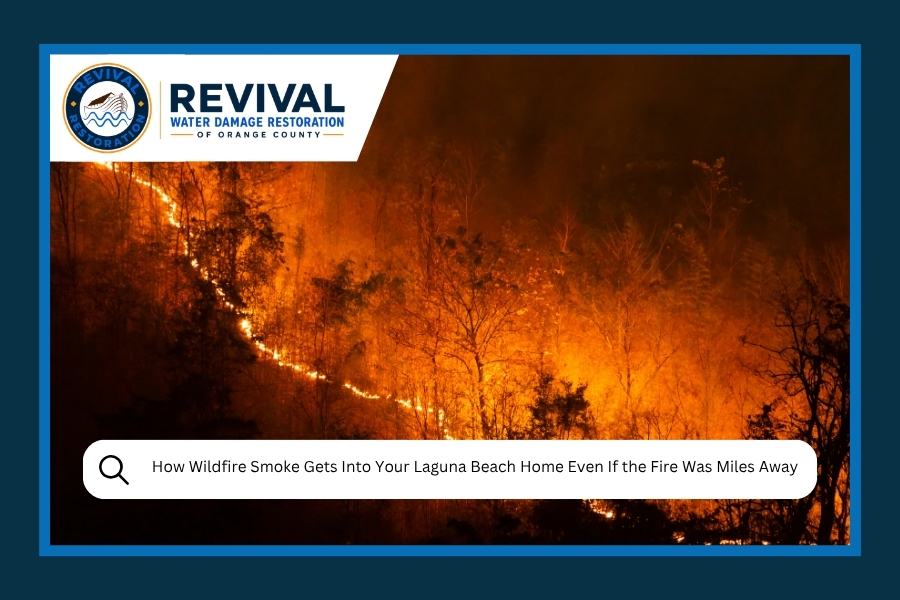
Wildfire smoke can drift for miles and still end up inside your Laguna Beach home, even when the flames never come close. It rides the wind. Then it sneaks indoors through your air system, small gaps around doors and windows, and attic vents.
Our family-owned team at Revival Water Damage Restoration of Orange County has spent more than 15 years helping local homeowners clean up after fire season. The fire can be far away. The smoke rarely is.
Here’s the part most homeowners miss. You don’t need a burn mark on your property to have a smoke problem. If you can smell it, it’s already inside.
How Smoke Travels Miles and Still Gets Inside
Wildfire smoke reaches homes far from the fire because it’s made of tiny bits called particles. They stay in the air and ride the wind for miles. In Laguna Beach, coastal breezes and canyon winds can carry that smoke right to your door. Once it shows up, your house pulls it in through everyday openings.
The most common entry points we see include:
- Air conditioning and heating intakes that draw outside air in
- Gaps around window frames, door thresholds, and pet doors
- Attic and roof vents, plus bathroom and kitchen exhaust fans
- Recessed lighting, outlets, and other small wall penetrations
If your home leans on that professional smoke and odor removal feeling after a nearby fire, the trapped particles inside are usually why. They settle into soft surfaces and keep releasing that burnt smell for weeks.
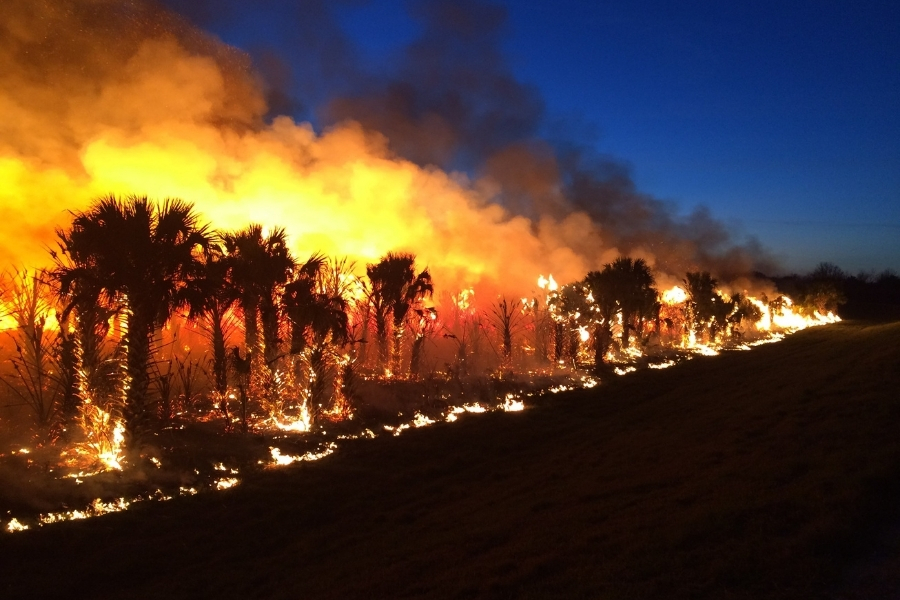
Wildfires are common in dry, hilly areas like Laguna Beach, and the smoke can reach homes far from the flames.
Why Your HVAC System Is the Biggest Culprit
Your HVAC system is the top way wildfire smoke spreads through a home. It moves air from room to room all day. When smoke gets pulled into the return, your ducts carry those bits everywhere. What starts near one vent can reach every bedroom in minutes.
Standard filters make this worse. Most homes run a basic filter built for dust and lint, not fine smoke. The EPA’s wildfire smoke resources note that a higher rated filter traps far more of what floats in.
A few HVAC steps that actually help
- Switch your thermostat fan setting to “auto” instead of “on” so it isn’t constantly pulling outside air
- Upgrade to a MERV 13 filter if your unit can handle it, and swap it out often during fire season
- Close the fresh-air intake damper if your system has one
How Smoke Moves Through Your Home
1. Outside: Wind carries fine smoke particles to your property.
2. Intake: Your HVAC return and small gaps pull that air inside.
3. Ductwork: The system spreads particles to every room.
4. Surfaces: Soot and odor settle into walls, fabric, and vents.
Smelling smoke long after the fire?
Our certified crew handles the cleanup so your home feels fresh again.
What Wildfire Smoke Leaves Behind Indoors
Wildfire smoke leaves behind fine soot, sticky film, and a stubborn odor that clings to soft surfaces. It isn’t just a bad smell. The particles are small enough to reach deep into your lungs. That’s why your indoor air matters so much during and after a fire.
The health side is real. Fine smoke can irritate the eyes, throat, and lungs. It hits kids, older adults, and anyone with asthma the hardest. The CDC wildfire smoke health guidance is a solid place to learn those risks.
Smoke also brings a cleanup wrinkle many people don’t expect. Soot and smoke residue behave differently, and knowing the smoke damage versus soot damage difference changes how a home should be cleaned.
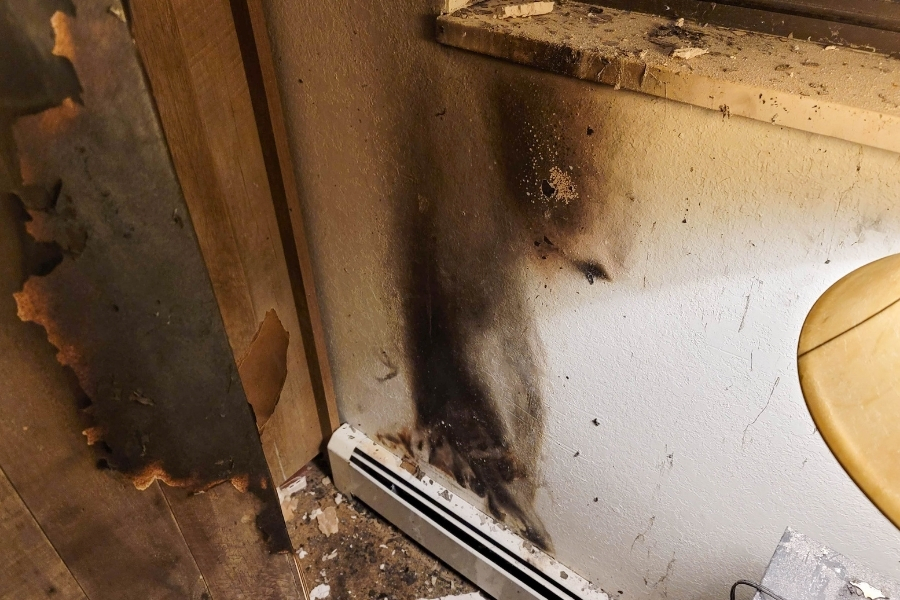
Even a distant fire can leave a visible haze and a lingering burnt smell inside a home.
Where Smoke Hides and What It Does
| Hiding Spot | What Happens There |
|---|---|
| HVAC ducts and filters | Particles spread to every room and keep recirculating |
| Carpet, curtains, upholstery | Soft fibers trap odor and release it for weeks |
| Walls and ceilings | A thin soot film dulls paint and holds smell |
| Attic and insulation | Smoke sits in hidden spaces long after the air clears |
Your Quick Smoke Infiltration Checklist
When smoke fills the air, a few quick moves can keep a lot of it out of your home. Work through this list as soon as you notice a haze or that campfire smell drifting in.
- Close all windows and doors, and check that weatherstripping is snug
- Set your HVAC fan to “auto” and put in a fresh, high rated filter
- Run a portable air purifier in the rooms you use most
- Skip anything that adds particles indoors, like candles or frying
- Wipe down hard surfaces once the outside air improves
- Snap photos of any visible soot in case you need them for insurance
When to Handle It Yourself vs Call a Pro
Light haze and a faint smell that clears in a day or two are usually fine to handle on your own. But watch for warning signs. Odor that sticks around, visible soot, or a heavy smell coming back through the vents means the smoke settled deeper than a surface wipe can reach.
That’s where our team steps in. We use HEPA filters, deep cleaning, and odor treatment that store sprays can’t match. We’re also happy to walk you through what our restoration process involves. If a nearby fire also left water or structural damage, our licensed crew handles the rebuild too.
We’re proud to offer real, local help with water damage restoration in Laguna Beach and across Orange County. No big-franchise runaround, just a family-owned team that treats your home the way we’d treat our own.
Not sure how deep the smoke got?
Let us take a look. We’ll tell you honestly what needs attention.
Frequently Asked Questions
Can wildfire smoke get into my home if the fire is miles away?
Yes. Fine smoke particles stay airborne and travel long distances on the wind. They enter through HVAC intakes, small gaps around windows and doors, and attic vents, so your home can smell smoky even when the fire is far off.
Does closing my windows keep wildfire smoke out?
Closing windows helps a lot, but it isn’t a full seal. Smoke still slips through worn weatherstripping, vents, and your HVAC system. Pairing closed windows with a high rated filter and an air purifier gives you much better protection.
How long does wildfire smoke odor last inside a house?
A light smell can fade in a few days once the outside air clears. Heavier odor trapped in carpet, ducts, and insulation can linger for weeks. If the smell keeps returning, the particles have settled deep and usually need professional cleaning.
Is wildfire smoke inside my home actually harmful?
It can be. Fine particles from smoke can irritate the lungs, eyes, and throat, and they affect children, older adults, and people with asthma most. Reducing indoor smoke and cleaning residue thoroughly protects your family’s air quality.